10 Common MVP Mistakes and How to Avoid Them
Ten mistakes that sink first products, from building before validating to treating launch as the finish line, each with a practical fix.
Most MVPs that fail do not fail because the code was bad. They fail because the team answered the wrong question, built the wrong thing, or learned nothing from launch. The good news is that the same handful of mistakes show up again and again, which means you can see them coming.
Here are ten of the most common, grouped by when they bite, with a practical fix for each.
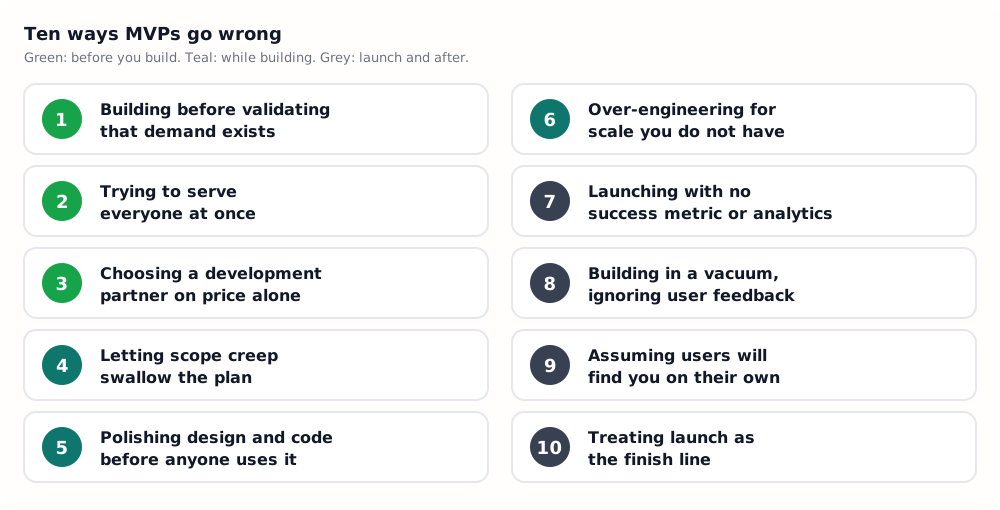
The ten mistakes at a glance
Before you build
1. Building before validating that demand exists
The most expensive mistake is spending months on a product nobody asked for. In its analysis of venture-backed startups that shut down since 2023, CB Insights found that 43% cited poor product-market fit among their reasons.
The fix: talk to ten people who have the problem before writing a line of code. Ask how they solve it today and what that costs them. If you can, get a commitment, such as a signed letter of intent, a pre-order or a waiting-list sign-up. Our guide to MVP vs prototype vs proof of concept explains which cheap test to run first.
2. Trying to serve everyone at once
"It is for small businesses, freelancers, agencies and enterprises." A product for everyone is a product that delights no one, and it makes every decision harder, from the feature list to the marketing message.
The fix: pick one customer type and one painful problem. Describe them in a sentence specific enough that you could find ten of them on LinkedIn tomorrow.
3. Choosing a development partner on price alone
The lowest quote often means a smaller team, fewer senior people, or a scope that quietly shrinks once the contract is signed. The cheapest build can turn into the most expensive one after a rewrite.
The fix: give every candidate the same written brief, compare line items, and ask the questions in how to choose an MVP development company. Choose the team whose questions made your idea clearer.
While building
4. Letting scope creep swallow the plan
Each extra feature seems small. Together they turn a four-week build into a four-month one, and every addition postpones the moment you learn whether the core idea works.
The fix: write the core flow as one sentence, rank features with MoSCoW or RICE (see how to prioritize MVP features), and keep a visible "after launch" list so that new ideas have somewhere to go.
5. Polishing design and code before anyone uses it
Pixel-perfect animations and a flawless architecture feel productive, but they are guesses until real users touch the product. Some of what you polish will be thrown away.
The fix: aim for "clear and working", not "beautiful and complete". Make the core flow easy to understand, and save the refinement for the parts that users actually use.
6. Over-engineering for scale you do not have
Microservices, Kubernetes and custom infrastructure solve problems that arrive with millions of users. With ten users, they just slow you down and cost money to run.
The fix: use a boring, popular stack and managed services, and change them when the product demands it. Our MVP tech stack guide has a sensible default.
Launch and after
7. Launching with no success metric or analytics
If you do not decide in advance what success looks like, every result can be explained away. "We got 200 sign-ups" is a win or a failure depending on what you expected.
The fix: choose one or two numbers before launch, such as activation rate, week-one retention or paid conversion, and set the level that would make you continue, change direction or stop. Add basic analytics events to the build so that the data exists.
8. Building in a vacuum and ignoring user feedback
Some teams launch, see low numbers, and respond by building more features instead of asking users what went wrong.
The fix: talk to people who signed up and then left, as well as those who stayed. Five honest conversations will often explain what a dashboard cannot.
9. Assuming users will find you on their own
"Build it and they will come" rarely works. Without a plan for reaching your first users, a good product can sit unseen.
The fix: decide how you will find your first 50 customers before you finish building. That might be direct outreach, a community where your users already gather, partnerships or content that answers the questions they search for.
10. Treating launch as the finish line
Spending the entire budget on version one leaves nothing for what you learn next. The first release is a question, and the answer will almost certainly require changes.
The fix: reserve part of the budget, commonly 15 to 20% or more, for post-launch iteration and support. Our MVP cost guide shows what to include.
A five-minute self-check
Before you start building, or before you approve another feature, answer these honestly:
- Who is the one customer I am building for, and have I spoken to ten of them?
- What is the single flow that proves the idea?
- What am I deliberately not building?
- What number will tell me this is working, and what level means success?
- How will my first 50 users find out about this?
- What budget and time remain after launch?
If you cannot answer one of them, that is the thing to work on next, before more code.
The takeaway
None of these mistakes is about technical skill. They are about focus, evidence and discipline. An MVP is an experiment, and a good experiment has a clear question, a small scope and a way to read the result. Get those right, and most of the technology decisions become much easier.
If you would like a second pair of eyes on your plan, talk to Srutved.
Tags
Keep reading